
Walls built for freeze-thaw, not just for photos.
Any wall looks good the day it’s built. What separates a wall that’s still standing straight in year 15 from one that’s leaning by year 3 comes down to what’s behind it - the base, and where the water goes
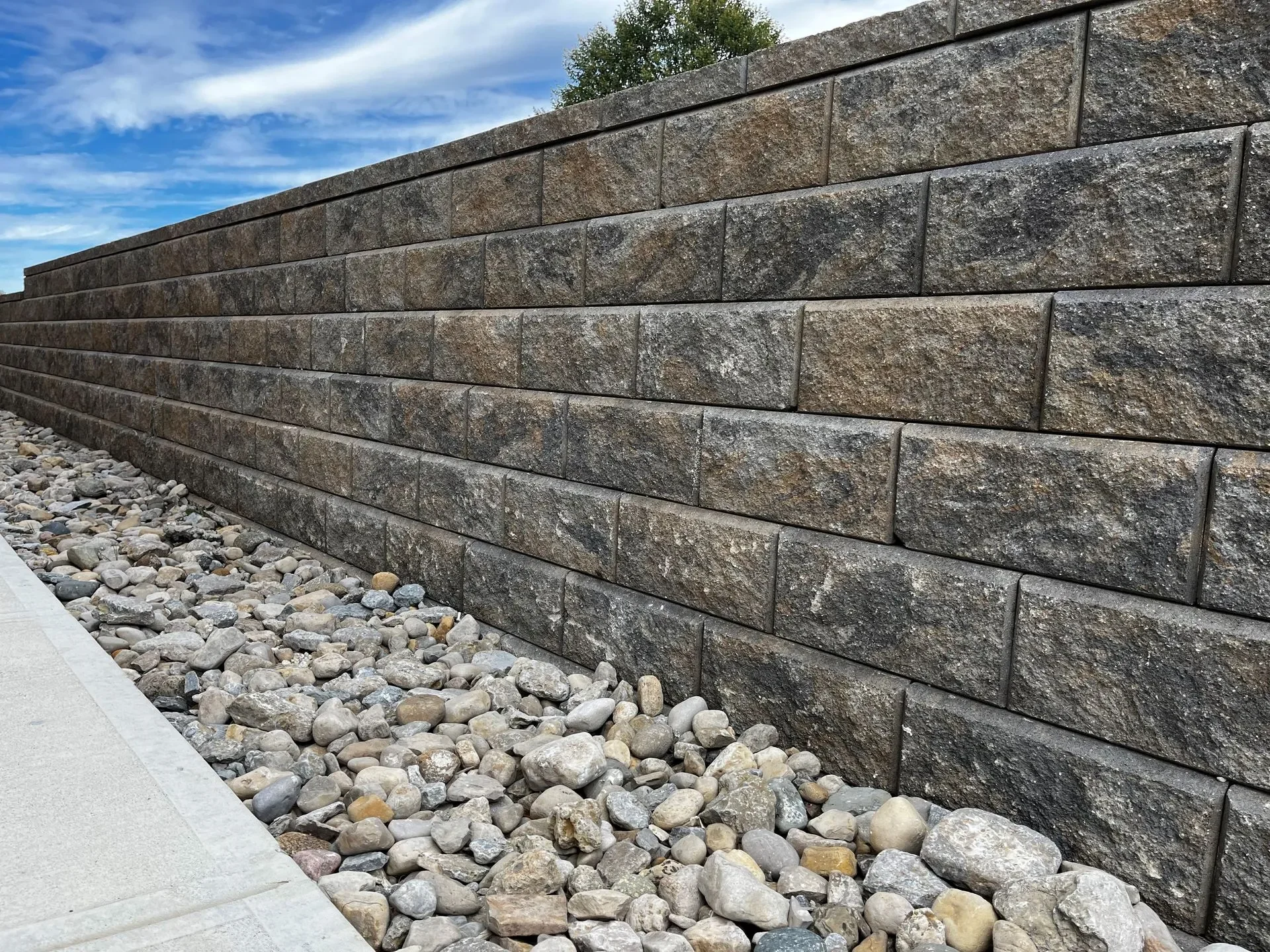
Behind the wall
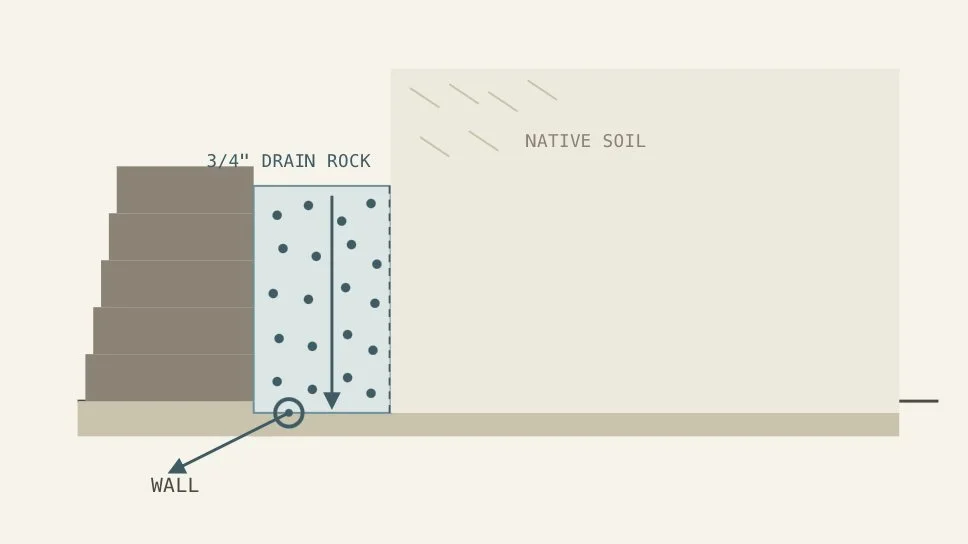
Our way
Open-grade drain rock goes behind the wall, wrapped in fabric, sitting on a compacted base - water has somewhere to go so it never builds up pressure on the wall
— Why walls actually fail
IT’S ALMOST NEVER THE WALL OR WHAT IT’S MADE OF.
Bulging, leaning, cracked walls usually have nothing to do with the material stacked in front - it’s what the contractor did (or didn’t do) behind it. Here’s the difference between a wall that lasts and one that doesn’t.
COMMON SHORTCUT
Backfilled with dirt
Native soil holds water like a sponge against the wall
Free-thaw cycles expand that trapped water, pushing outward every winter
Saturated soil is heavy - the wall is holding back mud, not gravel
Wall bulges, leans or falls within 5-10 years
THE MOUNTAINSIDE WAY
Compacted base + open-grade drain rock
Angular ¾” rock has air gaps that water can move straight through - nothing to freeze or expand
A compacted granular base under the footing keeps the whole wall from settling unevenly
Geotextile fabric keeps fine materials from clogging the rock over time
Built this way, a wall is a multi-decade fix, not a 5 year one.
— What we build
RETAINING WALLS, DONE PROPERLY FROM THE GROUND UP
New builds, repairs and rebuilds of walls that had corners cut the first time.
New retaining walls
Block, boulder or timber walls built on a compacted base with proper drain rock and a drainage pipe to put the water where we want it to go
2. Wall repair & rebuilds
Leaning, bulging or cracked wall? We diagnose what’s happening behind it and rebuild the drainage, not just re-stack the face
3. Terracing and sloped lots
Multi-tier wall systems for steep Okanagan properties, engineered to move water down and away instead of trapping it in the slope.
— Paver and Patios
SAME RULE APPLIES UNDERFOOT
Most patios get laid on a thin bed of sand. It looks fine at first — and then a season or two of freeze-thaw occur and wash outs create voids under the pavers — you get dips, rocking stones, and shifting joints.
10-12” 0
Drain rock base
Voids from washouts
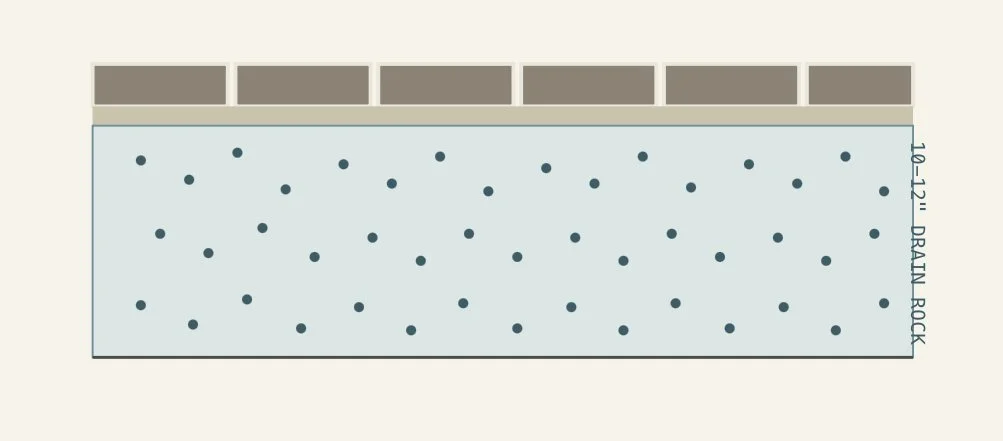
Under the patio
¾" rock stays put — no voids, no rocking stones, no re-leveling every couple of springs
- Where we work
KELOWNA, VERNON, SALMON ARM & THE SHUSWAP
Based in the Okanagan and Shuswap, building and repairing walls across the valley.
This is exactly the climate open-grade drainage was made for. The Okanagan and Shuswap go through dozens of freeze-thaw cycles every winter. Any water trapped behind a wall or under a patio gets a chance to freeze, expand and push — every single cycle. A wall built to drain shrugs it off. A wall back filled with dirt gets worked on by it, year after year
Let’s build something that stands the test of time.
Tell us about your wall, repair or patio project and we’ll get back to you with next steps.